Small rod. Thoughtful winter kit.
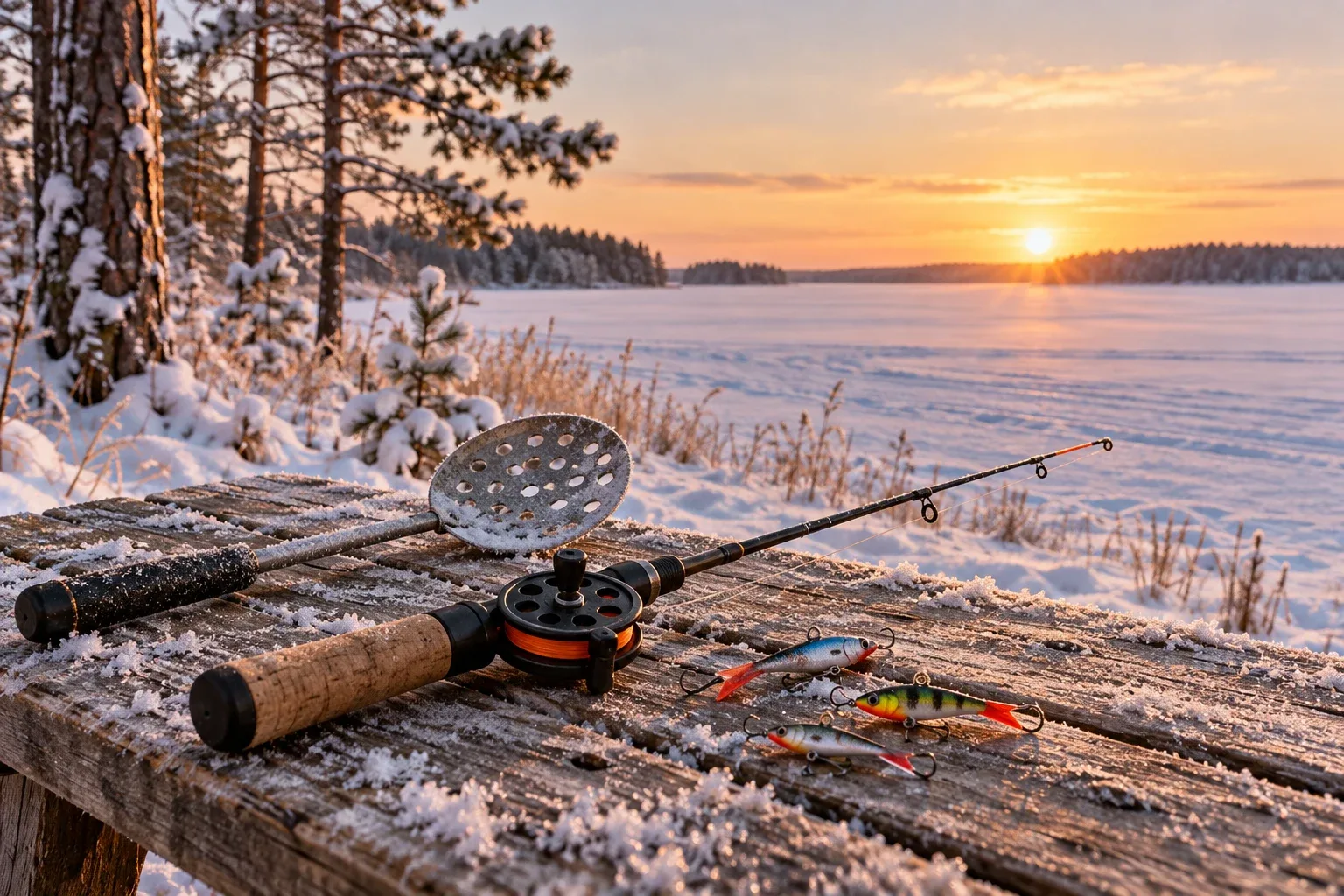
Ice-fishing equipment is compact, but choosing it still starts with a question: what are you fishing for, and how do you want to present the lure? A simple, well-matched kit is easier to understand than a bag full of unfamiliar tools.
Choose the rod around the presentation
Small jigs and heavier balancing lures do different jobs. Look for a short rod with a tip that gives useful feedback for your chosen lure. Pair the line and reel with the rod and target fish, rather than treating one setup as suitable for everything.
Try a controlled lift and pause when learning how a balancing lure moves. Different lures respond differently, so follow the manufacturer's advice and adjust the movement rather than copying one fixed rhythm.
The tools around the rod
- A skimmer for clearing loose ice from a fishing hole.
- A tackle box that keeps small hooks and lures organised.
- Pliers or a suitable unhooking tool.
- Warm layers and spare dry gloves.
An auger is a separate equipment choice: ask about size, transport and maintenance before buying. Sonar can help you interpret depth and fish movement, but it is optional equipment, not a requirement for starting.
Plan the day before packing the tackle
Frozen water can be dangerous even when it looks solid. Equipment does not make ice safe. Check current local authority advice and restrictions; never treat a photograph, footprints or another angler's presence as proof of safety. If conditions are uncertain, stay off the ice.
Bring your questions to OTTO. We can help you compare winter rods, lures and accessories before you choose your kit.
Browse winter rods → Explore winter lures → View augers →
Further reading: Rapala on balancing-lure movement and VUGD winter-safety information.